
1. The Shift to Customized Laser Vision Correction
Traditional LASIK primarily addresses lower-order aberrations: myopia (nearsightedness), hyperopia (farsightedness), and regular astigmatism. However, the human eye also suffers from higher-order aberrations (HOAs) such as coma, trefoil, and spherical aberration, which are responsible for visual disturbances like glare, halos, and diminished contrast sensitivity, particularly in low-light environments.
To correct these intricate optical flaws, refractive surgery introduced customized mapping. The two dominant paradigms are Wavefront-Guided technology, which measures the entire optical pathway of the eye, and Topography-Guided technology (such as Alcon's Contoura Vision), which focuses on meticulously mapping and smoothing the corneal surface itself.
2. Core Refractive Mapping Technologies
To examine the foundational optical protocols applied in customized laser suites without requiring horizontal table scrolling on mobile screens, essential clinical pillars are structured into responsive cards below:
Clinical Standard: Analyzes exactly 22,000 unique elevation points on the cornea, allowing the excimer laser to eliminate microscopic surface irregularities and irregular astigmatism.
Clinical Standard: Utilizes a Hartmann-Shack sensor to measure how light travels through the entire optical system (cornea, lens, and vitreous) to correct combined aberrations.
Clinical Standard: Contoura aligns the laser treatment to the visual axis (the true line of sight), whereas older technologies center the treatment on the anatomical pupillary center.
Clinical Standard: In FDA trials, topography-guided treatments consistently demonstrated the ability to push visual acuity past 20/20, often achieving 20/15 or 20/12.5.
Journey with Confidence
Your health and well-being are our priority. Experience world-class medical excellence while exploring the wonders of Istanbul.
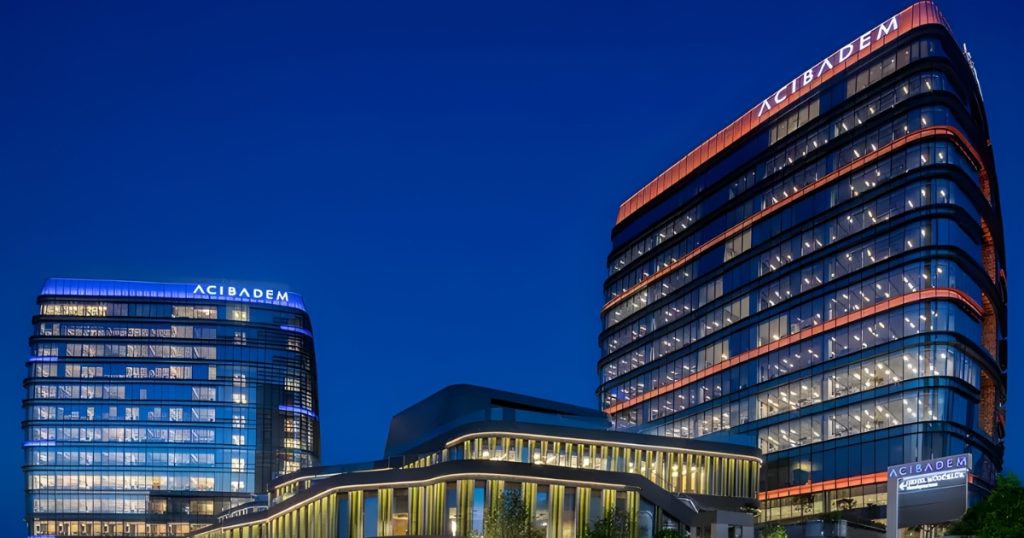
Acıbadem Hospitals Group:
Global Excellence in Healthcare
While you immerse yourself in the rich history of Istanbul, your well-being is protected by a future-focused healthcare leader. Acıbadem provides world-class medical services, from comprehensive health screenings to advanced treatments, all delivered with a commitment to your safety and comfort.
Travel with the assurance that you and your loved ones are in the most capable hands.
 Explore Medical Services →
3. Wavefront-Guided LASIK: Whole-Eye Aberrometry
Wavefront-Guided LASIK treats the eye as a single, complex optical system. During preoperative diagnostics, an aberrometer sends a safe ray of light into the eye. As the light bounces off the retina and returns through the vitreous, lens, and cornea, the sensor captures the distorted wavefront. This 3D map reflects every internal and external flaw in the light's pathway.
Because it measures the entire ocular pathway, Wavefront-Guided LASIK is highly effective for patients whose higher-order aberrations stem from internal structures, such as a slightly asymmetrical crystalline lens. By programming the excimer laser to negate these specific distortions, surgeons can significantly improve night vision and contrast sensitivity compared to conventional LASIK.
4. Contoura Vision: 22,000-Point Corneal Mapping
Contoura Vision (Topography-Guided LASIK) represents a paradigm shift by focusing exclusively on the cornea, which is responsible for about 70% of the eye's refractive power. Using the WaveLight Topolyzer VARIO, this technology captures 22,000 distinct topographical elevation points, creating a highly detailed micro-map of the corneal surface.
Rather than treating the whole optical system, Contoura isolates and neutralizes corneal irregularities. This is crucial because the cornea is the primary source of irregular astigmatism and high-order aberrations like coma. Furthermore, Contoura centers the laser ablation on the visual axis (the true line of sight) rather than the anatomical center of the pupil, yielding a vastly more precise refractive correction.

5. Super-Vision Benchmarks and Night Glare Reduction
Clinical outcome data strongly favors customized treatments over standard profiles, but Topography-Guided LASIK has set unprecedented benchmarks. In FDA clinical trials for Contoura Vision, approximately 65% of patients achieved 20/15 vision, and a remarkable 34% achieved 20/12.5 vision—levels of acuity colloquially termed "super-vision," which are sharper than standard 20/20.
Equally important is the reduction of photic phenomena. While Wavefront-Guided LASIK significantly reduces the induction of new glare and halos compared to older lasers, Contoura Vision was the first technology proven in FDA trials to actually *decrease* the incidence of visual disturbances like light sensitivity, difficulty driving at night, and reading difficulty post-operatively compared to the patient's preoperative state with glasses or contacts.
Despite its complexity, Topography-Guided LASIK (Contoura) is highly tissue-efficient. By targeting only the specific hills and valleys of the cornea, it often requires less stromal tissue removal than Wavefront-Guided profiles, preserving greater corneal biomechanical strength.
Enrich Your Exploration
Enhance your medical journey with our hand-picked partners offering luxury stays and seamless travel in Turkiye.

Four Seasons:
Bosphorus, Perfected
Escape the city's vibrant pulse to a serene waterfront palace. Here, timeless elegance and flawless service create your perfect moment.
 Book Your Escape →

Garenta:
Discover More of Turkiye
Don't just see the landmarks; experience the real culture. Garenta offers the freedom to discover hidden treasures at your own pace.
 Get Your Car →
Academic References & Data Sources
- Journal of Refractive Surgery: Clinical Outcomes of Topography-Guided Refractive Surgery with Contoura Vision System.
- American Academy of Ophthalmology (AAO): Comparative Analysis: Wavefront-Guided vs. Topography-Guided LASIK for Myopia and Astigmatism.
- Clinical Ophthalmology: Visual Axis Alignment and High-Order Aberration Reduction Using 22,000-Point Corneal Mapping.